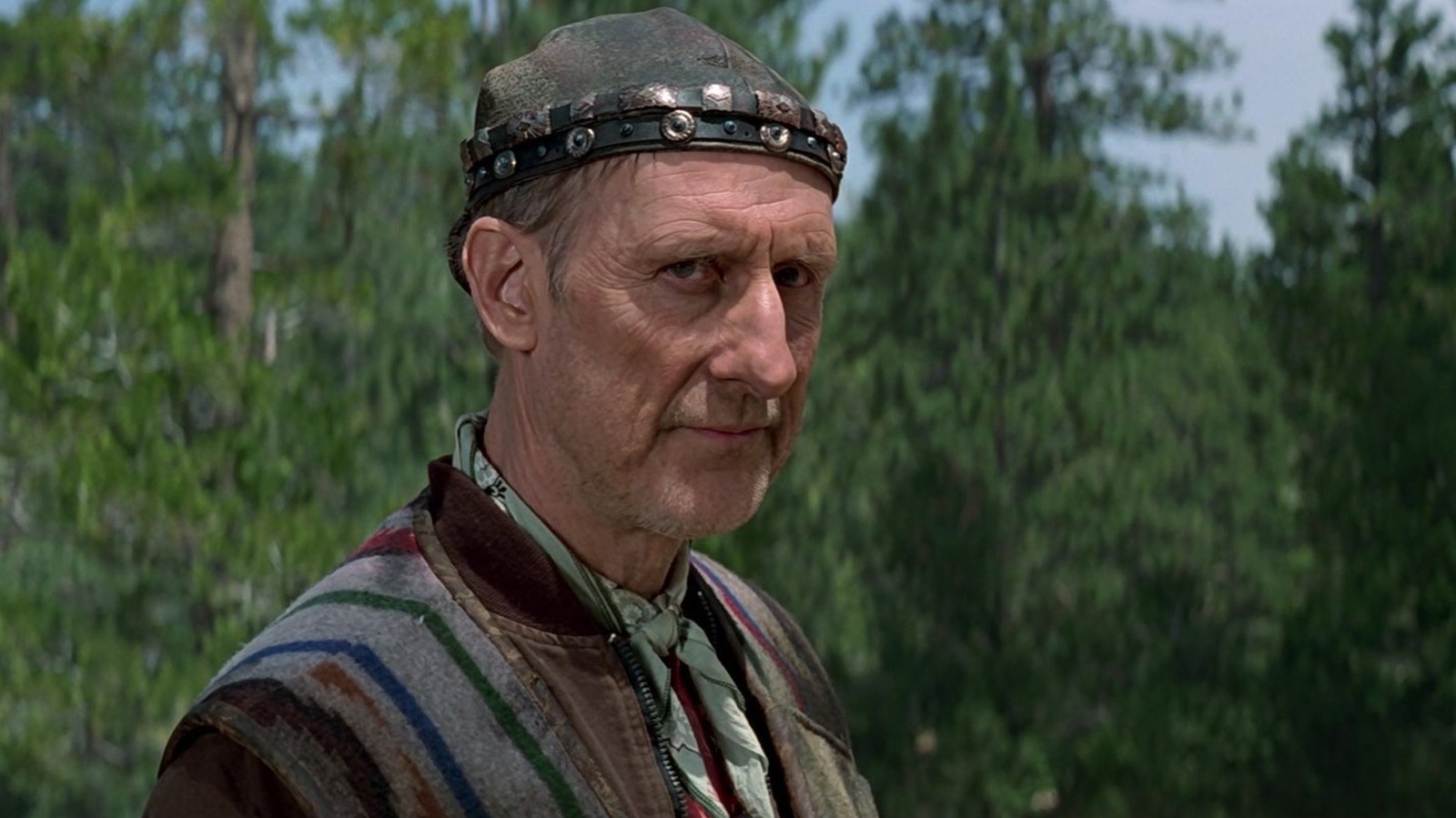
Few science fiction films have captured the cultural bridge between speculative storytelling and real-world science like Star Trek: First Contact. While audiences remember the film for its bold Borg invasion and Captain Picard’s brooding intensity, one lesser-known truth reveals how deeply science—and belief in the possibility of extraterrestrial life—influenced the casting. A key actor joined the production not just for the role, but because their personal, real-life engagement with extraterrestrial studies shaped their worldview and artistic choices. That actor was James Cromwell.
Cromwell, who portrayed Zefram Cochrane—the reluctant genius behind Earth’s first warp flight—brought more than acting chops to the role. He brought a quiet conviction rooted in years of scientific curiosity and advocacy for space exploration. His involvement wasn’t merely contractual; it was ideological. And it’s that rare alignment of personal belief, scientific inquiry, and cinematic storytelling that helps explain why his performance resonates so authentically.
Why Zefram Cochrane Mattered—And Why Casting Was Crucial
Zefram Cochrane is a mythic figure in the Star Trek universe. His warp flight in 2063 draws the attention of a passing Vulcan ship, marking First Contact and the beginning of humanity’s interstellar age. The character needed to embody both brilliance and imperfection—an accidental pioneer, not a polished hero.
The filmmakers didn’t want a caricature of a scientist. They needed someone capable of conveying skepticism, awe, and transformation. James Cromwell, already known for nuanced performances, was a surprising but inspired choice. What many didn’t know at the time was that Cromwell’s interest in science—particularly the search for extraterrestrial intelligence—wasn’t a recent affectation. It was a decades-long engagement that informed his worldview.
James Cromwell’s Lifelong Fascination with Extraterrestrial Intelligence
Long before donning Cochrane’s leather jacket and stumbling through a drunken first handshake with an alien, Cromwell was deeply curious about space and the possibility of life beyond Earth. He didn’t merely play a visionary—he respected them.
Cromwell’s interest in extraterrestrial studies wasn't rooted in conspiracy or fringe belief. Instead, it aligned with the principles of scientific inquiry, particularly the work being done at institutions like the SETI Institute (Search for Extraterrestrial Intelligence). He’s expressed admiration for scientists like Jill Tarter and Frank Drake, whose methodical, data-driven approach to scanning the cosmos for signals represents the kind of rational optimism Star Trek has always championed.
In interviews, Cromwell has spoken about the philosophical implications of discovering alien life. For him, it’s not just about technological contact—it’s about humility. "If we’re not alone," he once said, "then we’re part of something much larger. That should change how we treat each other, and our planet."
This mindset didn’t just inform his off-screen views. It made him a more compelling Cochrane. When he delivers the line, “They’re not going to believe this,” after seeing the Vulcans, there’s a mix of disbelief and dawning responsibility—a man suddenly aware he’s standing at the edge of a new era. Cromwell didn’t have to act that weight. He already felt it.
The Overlap Between Science Advocacy and Acting Roles

Cromwell’s casting wasn’t happenstance. The Star Trek franchise has a long history of casting actors with real-world scientific credibility or interest. However, few examples are as thematically fitting as Cromwell in First Contact. His personal alignment with the film’s core message—that humanity’s future depends on curiosity, cooperation, and courage—wasn’t just convenient. It was essential.
Other actors in the Star Trek universe have had scientific ties—William Shatner trained with NASA, Brent Spiner studied computer science, and LeVar Burton became a prominent STEM advocate. But Cromwell’s connection was different. It wasn’t about background knowledge or promotional synergy. It was about belief in the mission—the idea that reaching out to the stars isn’t fiction, but a necessary evolution.
This kind of authenticity is rare. In an industry driven by image and marketability, actors who engage seriously with science are often sidelined. Cromwell, however, has used his platform to advocate for environmental causes, animal rights, and—consistently—space exploration. His 2015 speech at the United Nations on climate change referenced Star Trek as a model for global cooperation, drawing a direct line between Cochrane’s world and our own.
How Real-World Beliefs Shape On-Screen Authenticity
Audiences can sense when a performance is hollow. But they can also detect when an actor truly believes in the world they’re portraying. Cromwell’s portrayal of Cochrane works because it’s underpinned by genuine conviction.
Consider the scene where Cochrane watches the Vulcan ship land. It’s quiet, almost reverent. There’s no grand music swell—just awe. Cromwell doesn’t overplay it. He stands, drinks in hand, as if realizing that everything he thought he knew about humanity’s place in the universe has just shifted. That moment isn’t just written well—it’s lived.
This authenticity is why the character endures. It’s also why First Contact remains one of the most thematically coherent entries in the Star Trek film series. The film isn’t just about defeating the Borg. It’s about the moment humanity grows up—when fear gives way to curiosity.
Cromwell’s real-life studies and advocacy didn’t give him special access to the script or influence over plot points. But they gave him something more valuable: emotional truth. He didn’t need to imagine what it would feel like to make first contact. He’d already spent years imagining what it should mean.
The Ripple Effect: When Actors Bring Science to Storytelling
Cromwell’s involvement highlights a broader trend: the growing intersection between science and entertainment. More actors today are engaging with STEM fields—not for publicity, but out of genuine interest. Natalie Portman studied neuroscience at Harvard. Mayim Bialik holds a PhD in neuroscience and brought her expertise to The Big Bang Theory. Brian May, lead guitarist of Queen, has a PhD in astrophysics and remains active in space research.
But Cromwell’s case is unique because his scientific interest directly influenced his casting in a role that symbolizes scientific breakthrough. It’s one thing to play a scientist convincingly. It’s another to embody the spirit of scientific discovery because you’ve lived it.
This isn’t about credentialed expertise. It’s about perspective. An actor who reads scientific literature, attends lectures, or supports research organizations brings a different energy to roles involving discovery, ethics, and responsibility. That energy matters—especially in science fiction, where the line between imagination and prediction is often thin.
Why This Matters for Future Sci-Fi Casting
The success of First Contact—and Cromwell’s performance in particular—shows that casting decisions rooted in authenticity can elevate genre storytelling. As studios continue to mine sci-fi for blockbuster potential, there’s a temptation to prioritize star power over substance. But the most memorable performances often come from actors who understand the deeper themes.
Imagine more casting directors seeking out performers with real-world ties to science, philosophy, or ethics. An actor who’s studied climate science playing a Mars colonist. A former engineer portraying a rogue AI developer. These aren’t gimmicks—they’re opportunities for richer storytelling.
Cromwell’s journey from activist and science advocate to Zefram Cochrane proves that lived experience, even outside traditional training, can be a form of preparation. His role wasn’t just played—it was inhabited.
A Model for Science-Inspired Storytelling
Star Trek: First Contact works because it balances action with meaning. The Borg are terrifying, but the heart of the film is Cochrane’s choice to step forward—not as a hero, but as a human being.
James Cromwell didn’t join the film because of a fan’s nostalgia or a paycheck. He joined because he believed in the message. His real-life engagement with extraterrestrial studies gave him the emotional vocabulary to portray a man discovering that humanity isn’t alone—and realizing what that means.
In an era where misinformation about science spreads rapidly, stories like this matter. They remind us that art and science aren’t opposites. They’re allies. And when an actor like Cromwell bridges the two—not for show, but because they’ve spent years thinking about the stars—they don’t just play a role. They become part of the mission.
Next time you watch First Contact, listen closely when Cochrane says, “Today is perfect.” It’s not just about sobriety. It’s about the moment humanity chooses hope over fear. And James Cromwell, the actor who studied the possibility of alien life long before stepping on set, makes you believe it could happen.
FAQ
Did James Cromwell have formal training in science? No, Cromwell doesn’t hold a scientific degree, but he’s well-read in astronomy, physics, and SETI-related research, and has engaged with scientists throughout his career.
Was his interest in extraterrestrial life known during casting? Not officially, but the Star Trek casting team valued authenticity, and Cromwell’s intellectual depth aligned with the character’s needs.
Has he spoken publicly about aliens? Yes—Cromwell has expressed belief that intelligent life likely exists elsewhere and that contact would be transformative for humanity.
Did he influence any dialogue or scenes? There’s no record of script changes from Cromwell, but his interpretation of Cochrane added layers of skepticism and wonder not fully on the page.
Are other Star Trek actors involved in science advocacy? Yes—LeVar Burton, Nichelle Nichols, and George Takei have all promoted STEM education and space exploration.
Is there a link between Star Trek and real SETI research? Yes—SETI scientists have cited Star Trek as an inspiration, and some episodes have consulted with NASA and astronomers.
Could an actor’s scientific interest affect future casting? Increasingly, yes—especially in hard sci-fi, where authenticity enhances believability and audience trust.
FAQ
What should you look for in How a Star Trek: First Contact Actor Joined for Alien Research? Focus on relevance, practical value, and how well the solution matches real user intent.
Is How a Star Trek: First Contact Actor Joined for Alien Research suitable for beginners? That depends on the workflow, but a clear step-by-step approach usually makes it easier to start.
How do you compare options around How a Star Trek: First Contact Actor Joined for Alien Research? Compare features, trust signals, limitations, pricing, and ease of implementation.
What mistakes should you avoid? Avoid generic choices, weak validation, and decisions based only on marketing claims.
What is the next best step? Shortlist the most relevant options, validate them quickly, and refine from real-world results.